Showing posts with label hot dogs. Show all posts

Bacon Hot Dogs


 Pictured above is "Pinks" Mulholland Drive Dog. This is a 10" STRETCH dog grilled onions, grilled mushrooms, nacho cheese & bacon. photo by: punkjr/ license

About Bacon and Hot Dogs:

"Bacon is a cut of meat taken from the sides, belly, or back of a pig, and then cured, smoked, or both. Bacon may be eaten fried, baked, or grilled, or used as a minor ingredient to flavour dishes." The same goes for hot dog weenies too- they can be grilled, steamed, boiled, barbecued, pan fried, deep fried, broiled or microwaved and each way you cook them will change the flavor and texture of the hot dog. Hot dogs can be made with any flavor sausage and not just your standard weenie.

What is a Bacon Hot Dog?

Well, it's a hot dog with lots of fried bacon on top. The great thing about bacon hot dogs is that you can make them any way you like; with any topping that you like as long as bacon is added to it. One variation of the bacon dog is "Pinks" Mulholland Drive Dog. This is a 10" STRETCH dog grilled onions, grilled mushrooms, nacho cheese & bacon. In fact the photo at the top of the page is one of Pinks creations- www.pinkshollywood.com/pgz/menu.htm

Halloween Hot Dog Favorites:

We all know that bacon hot dogs and bacon dogs with chili are always a favorite for Halloween and at fall festivals; but do you know why? Well for Halloween, it's traditional to eat foods that are ugly. The uglier the better because it makes for a spooky eating experience. Foods like crispy bacon, limp grilled onions and mushroom are favorites on hot dogs at Halloween because they are indeed u-g-l-y. Many times you find them labeled with the name "Monster Dogs". Not because they are monster in size but because the hot dog is made to look like a monster. The gray button mushrooms are perfect for monster eyes and the crinckled bacon helps to give it a scary wooly look. (similar in looks to a Monster Sandwich) Add a red cream style chili to look like blood and you have the most popular hot dogs served at Halloween. Bell pepper strips or banana peppers are used for the mouth. For flavor you can add mustard or cheese to the underside of the dog but never on top. The bacon and mushrooms are always what you see on the very top of the dog to better form the monster face.

Variations in Hot Dogs

"Hot dogs may be grilled, steamed, boiled, barbecued, pan fried, deep fried, broiled, or microwaved. Some cooks prefer to boil their hot dogs in beer. While hot dogs are always cooked before packaging, they should not be eaten cold from the package.
......................................................★☆★......................................................

Holiday Calendar

Our holiday calendar is packed full of National Food Holidays just waiting to be celebrated. Yep, it sure is, and I think bacon hot dogs are the perfect choice for National Hot Dog Month, National Hot Dog Day or International Bacon Day. 
......................................................★☆★......................................................

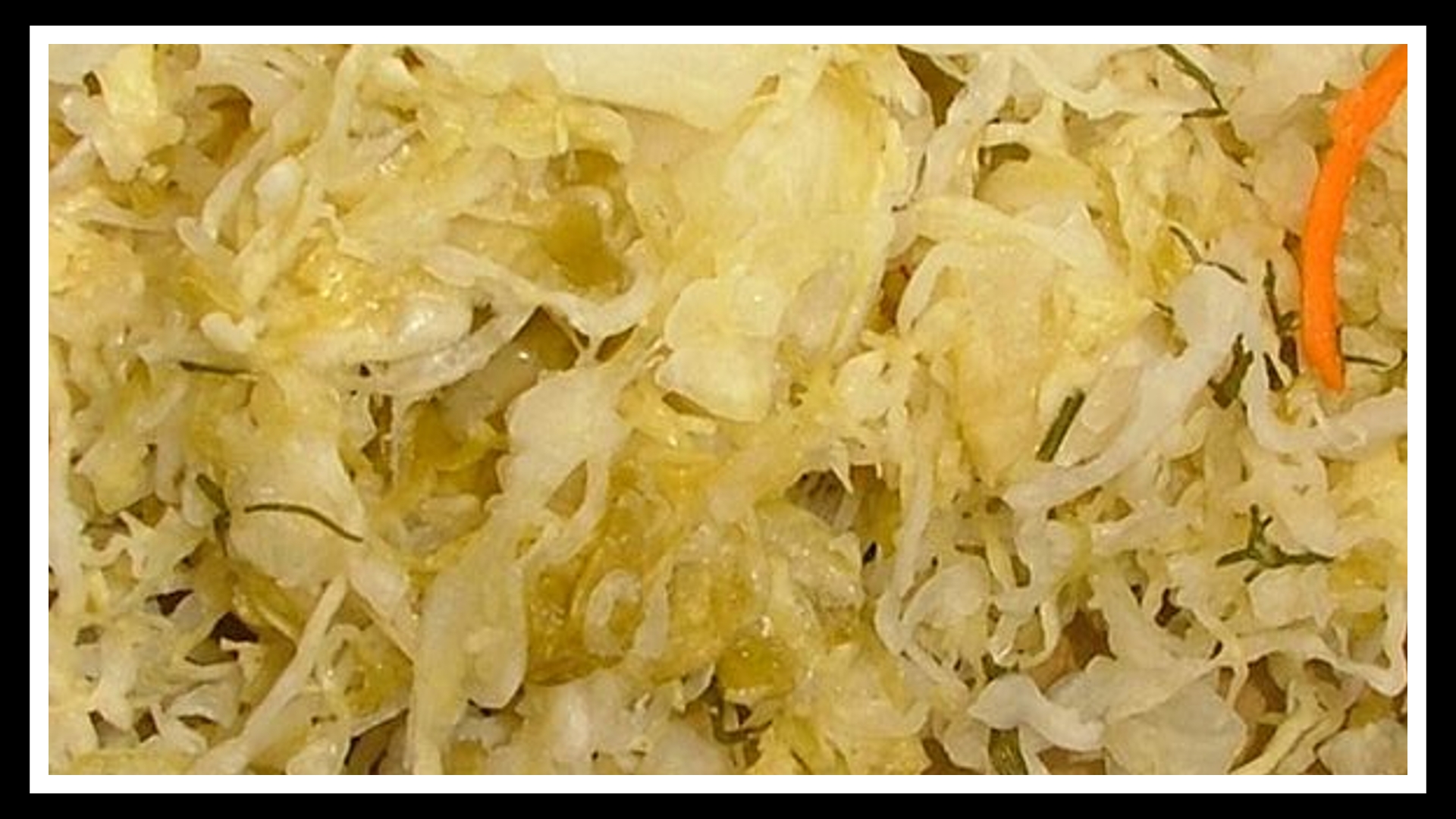
Basic Sauerkraut Recipe that produces a tangy taste


Recipe for Sauerkraut / Hey friends, In honor of National Hot Dog Month and National Hot Dog Day I'm posting this 2 ingredient sauerkraut recipe for everyone.

"Sauerkraut is a traditional fermented vegetable food made from cabbage. This is a basic recipe that produces a tangy sauerkraut with live bacteria that provide probiotic goodness. No cooking is required.

Ingredients
  • 1 large (2.5 kg - 5 lb) fresh cabbage
  • 2-3 tablespoons non-iodized salt

Preparation
  • Clean and dry a large (3 liter) preserves jar or crock, chopping board, and large bowls if needed
  • Quarter the cabbage and remove the core
  • Slice the cabbage finely or thickly, as you prefer
  • Optional: bruise the sliced cabbage by beating with a rolling pin or mortar and pestle
  • Layer the cabbage in the jar or crock, sprinkling salt in between layers
  • Pack tightly into the jar, leaving 1cm space at the top; don't seal the jar yet
  • Juice should rise to top of jar as you tightly pack the cabbage in; if not, add a little chlorine-free water

Fermentation
"Don't seal the jar while it is fermenting, as it will build up gas pressure and might break the jar. Just cover with a cloth, or cling-wrap. Set the jar in a bowl or on a plate, so that any juice that might overflow will be collected and won't make a mess."

"The sauerkraut will be fermented in about a week. Wipe any excess liquid from around the jar and put the lid on tightly before moving it to the refrigerator) to mature. It is ready to eat after the first week, but will improve with age and as the bacteria slowly consume the more complex sugars in the cabbage."

Notes, tips, and variations
  • The salt used should be non-iodized salt if possible - e.g. pickling salt, kosher salt. This is because the iodine in iodized table salt will inhibit the fermentation a little. Use what you've got, but best results will be obtained without the iodine.
  • Add other vegetables, fruits, or spices for variations, e.g. - juniper berries /diced pineapple /onion / chili / grated carrot
  • The cabbage can be quickly sliced to a regular thickness by using a mandolin. Fingers can be sliced just as quickly...
______________________________________________________________

Serving
"Sauerkraut may be eaten raw and unadorned; in this form it is often eaten as a relish with meat dishes. Raw sauerkraut dressed with oil and onions is served as a salad, while warmed sauerkraut is also commonly served on a Reuben sandwich." 
......................................................★☆★......................................................

"Live everyday like a holiday." Pam
......................................................★☆★......................................................
This article is licensed under the GNU Free Documentation License.  It uses some material from Wikipedia 

Top 10 Hot Dog Condiments


Variations in Hot Dog Condiments:  "Throughout the world, there are numerous variations in hot dog condiments. Below are the Top 10.

  • Chili: "Chili con carne (literally "Chili with meat", often known simply as chili) is a spicy stew made from chili peppers, meat, garlic, onions, and cumin. Traditional chili is made with chopped or ground beef. Variations, either geographic or by personal preference, may substitute different types of meat and may also include tomatoes, beans, or other ingredients. The name "chili con carne" is a variation of the Spanish chile con carne, which means "peppers with meat."  

  • Mustard: "Mustard is a thick yellowish-brown paste with a sharp taste made from the ground seeds of a mustard plant (white or yellow mustard, Sinapis hirta; brown or Indian mustard, Brassica juncea; or black mustard, Brassica nigra)."

  • Ketchup: "Ketchup (also spelled Catsup or Catchup), also known as tomato ketchup or red sauce, is a condiment usually made from tomatoes. The primary ingredients in a typical modern ketchup are tomato concentrate, corn syrup (or other sugar), vinegar, salt, spice and herb extracts (including celery), spice and garlic powder-"

  • Pickle Relish:  "A relish is a cooked pickled, chopped vegetable or fruit food item which is typically used as a condiment.  Description and ingredients: The item generally consist of discernible vegetable or fruit pieces in a sauce, although the sauce is subordinate in character to the vegetable or fruit pieces. It might consist of a single type of vegetable or fruit, or a combination of these. These fruits or vegetables might be coarsely or finely chopped, but generally a relish is not as smooth as a sauce-type condiment, such as ketchup. The overall taste sensation might be sweet or savory, hot or mild, but it is always a strong flavor that complements or adds to the primary food item with which it is served."  *Hot dogs in the Boston area are associated with Boston baked beans, though this is probably not unique to the region. Ketchup, mustard, relish, picalilli, and chopped onions are the most common toppings. 

  • Cole Slaw:  "Coleslaw is a salad consisting primarily of shredded raw cabbage. It can also include shredded carrots. There are many variations of the recipe which include the addition of other ingredients, such as red cabbage, grated cheese, pineapple, or apple. It is usually mixed with a dressing which traditionally consists of vegetable oil and vinegar or a vinaigrette. In the U.S. coleslaw often contains mayonnaise (or its substitutes); although many regional variations exist, and recipes incorporating prepared mustard are also common. Barbecue slaw, also known as red slaw, is made using ketchup rather than mayonnaise. Coleslaw is generally eaten as a side dish with foods such as barbecue, French fries, and other fried foods; notably, fried seafood in the Southern United States. Also, in this region, it is common as a sandwich ingredient, often placed on barbecue sandwiches, and on hamburgers and hot dogs along with chili and hot mustard."

  • Saurkraut: (sauerkraut) "finely shredded cabbage that has been fermented by various lactic acid bacteria, including Leuconostoc, Lactobacillus, and Pediococcus. It has a long shelf-life and a distinctive sour flavor, both of which result from the lactic acid that forms when the bacteria ferment the sugars in the cabbage. It is therefore not to be confused with coleslaw, which receives its acidic taste from vinegar." 

  • Onion:  "Onions, one of the oldest vegetables known to humankind, are found in a large number of recipes and preparations spanning almost the totality of the world's cultures. They are nowadays available in fresh, frozen, canned, pickled, powdered, chopped, and dehydrated forms. Onions can be used, usually chopped or sliced, in almost every type of food including cooked foods and fresh salads and as a spicy garnish. They are rarely eaten on their own but usually act as accompaniment to the main course. Depending on the variety, an onion can be sharp, spicy, tangy and pungent or mild and sweet."

  • Mayonnaise:  "Mayonnaise (sometimes abbreviated to mayo in English and other languages) is a thick condiment made primarily from vegetable oil and egg yolks. Whitish-yellow in color, it is a stable emulsion formed from the oil and the yolks and is generally flavored with mustard, lemon juice or vinegar and salt. Numerous other sauces can be created from it by adding additional seasonings."

  • Lettuce: "It is most often grown as a leaf vegetable. In many countries, it is typically eaten cold, raw, in salads, sandwiches, hamburgers, tacos, and in many other dishes. Lettuce is a fat free, low calorie food and is good for a well balanced diet. It is a valuable source of vitamin A and folic acid. Lactucarium (or “Lettuce Opium”) is a mild opiate-like substance that is contained in all types of lettuce. Both the Romans and Egyptians took advantage of this property eating lettuce at the end of a meal to induce sleep."

  • Tomato: "Tomatoes are used extensively in Mediterranean cuisine, especially Italian and Middle Eastern cuisines. The tomato is acidic; this acidity makes tomatoes especially easy to preserve in home canning whole, in pieces, as tomato sauce, or paste. Tomato juice is often canned and sold as a beverage; Unripe green tomatoes can also be breaded and fried, used to make salsa, or pickled. The fruit is also preserved by drying, often by sun, and sold either in bags or in jars in oil."

  • Cheese: "Cheese is a food consisting of proteins and fat from milk, usually the milk of cows, buffalo, goats, or sheep. Hundreds of types of cheese are produced. Their different styles, textures and flavors depend on the origin of the milk (including the animal's diet), whether it has been pasteurized, butterfat content, the species of bacteria and mold, and the processing including the length of aging. Herbs, spices, or wood smoke may be used as flavoring agents."

  • Pico de Gallo: "The most familiar to North Americans is a fresh, tomato-based condiment. It is what North Americans usually mean when talking about "salsa" or "tomato salsa." This salsa is never cooked."

  • Chili Peppers: "Chili pepper (also known as, or spelled, chilli pepper, chilli, chillie, chili, and chile) is the fruit of the plants from the genus Capsicum, members of the nightshade family, Solanaceae. Botanically speaking, the fruit of capsicums are berries. Depending on flavor intensity and fleshiness, their culinary use varies from use as a vegetable (eg. bell pepper) to use as a spice (eg. cayenne pepper). It is the fruit that is harvested." 

They are usually served in a bun.
......................................................★☆★......................................................
This post is in honor of National Hot Dog Month and National Hot Dog Day
......................................................★☆★......................................................

Vegetarian Hot Dog Danish Style


Vegetarian Hot Dog Danish Style contains Vegetarian Sausages, Mayonnaise, Hot-Dog-Ketchup, roasted Onion and Cucumber."

 Let's talk about the Vegetarian Hot Dog

"A vegetarian hot dog (sometimes referred to as a "veggie dog") is a hot dog produced completely from non-meat products."

"Vegetarian hot dogs are sometimes eaten by non-vegetarians because they are believed to be lower in fat, calories, and cholesterol than hot dogs from beef or chicken. Unlike traditional home-made meat sausages, the casing is not made of intestine but of synthetic ingredients. Vegetarian hot dogs are usually based on some sort of soy protein.  Some contain egg whites, which would make them unacceptable to vegans. There are also vegetarian hot dogs made from tofu. Like ordinary dogs, vegetarian hot dogs contain little fiber."

"The history of the vegetarian hot dog is not clear, but Worthington Foods' Veja-Link meatless wieners claim to have been the world's first vegetarian hot dogs in 1949. On June 19, 2000, the Chicago White Sox made baseball history when they began selling vegetarian hot dogs during games at Comiskey Park. The vegetarian sausage without a bun is much more common from the early 20th century, for example the 1913 Indianapolis (Indiana) Star 15 June 8/1 mentions someone who "says he has lived on his vegetarian sausage almost exclusively". This is cited in the Oxford English Dictionary December 2007 draft additions entry for the adjective vegetarian, but no vegetarian hot dog, wiener or frankfurter is noted."

All vegetarian diets are not alike
Ovo-vegetarian: eats eggs; no meat
lacto-ovo vegetarian: eats dairy and egg products; no meat
lacto-vegetarian: eats dairy products; no eggs or meat
Vegan: eats only food from plant sources
Many other people are semi-vegetarians who have eliminated red meat, but may eat poultry or fish.

When is National Hot Dog Month? Always  July!  (festival dates vary)
"Industry groups, such as National Hot Dog & Sausage Counci in the USA, designates July as National Hot Dog Month and July 23 as National Hot Dog Day, are known to encourage, sponsor, and support hot dog events."

How to make a Breakfast Jersey Dog / Danger Dog information


Pictured: "A deep fried "Jersey Breakfast" dog, wrapped with bacon and served over a fried egg and melted cheese, from Amazing Hot Dog in Verona, New Jersey. A perfect breakfast meal done the hot dog way.

Definition of a Danger Dog Hot Dog:

"Danger dog is the slang term for a type of hot dog first sold by street vendors in Tijuana, Mexico and is also known as a "Tijuana bacon dog" or a "dog dog." A danger dog is a hot dog wrapped in a piece of bacon, fried in oil and served on a bun with grilled onions and chili sauce."

"The term "danger dog" originates from this form of hot dog's reputation as being of cheap quality (or presumed low quality, as it is usually sold by unlicensed street vendors). The danger dog has recently turned up north of the border and is now being sold by Los Angeles, San Francisco, and New York City street vendors."

"On the east coast of the United States, a variation has appeared with the bacon-wrapped hot dog being deep-fried and called a "Jersey breakfast dog". There is a tradition in New Jersey of serving hot dogs that have been deep-fried in boiling oil until they rip apart ("rippers") or just blister lightly (an "in and outer"). The Jersey dog is usually served atop fried or scrambled eggs."
_______________________________________________________________

Jersey Breakfast Dog

Ingredients
  • 1 beef hot dog
  • 1 strip bacon
  • 1 large egg
  • 1 slice American or cheddar cheese
  • 1 bun

Directions
  1. Preheat deep fryer to 355°F.
  2. Wrap bacon around the hot dog, securing at each end with a toothpick.
  3. When oil reaches 355°F, lower wrapped hot dog into fryer.
  4. Heat frying pan and fry one egg.
  5. Place cooked egg on a small plate.
  6. Open bun and place onto frying pan on low heat or in toaster oven to lightly toast.
  7. When bacon is firm and crispy, remove hot dog from oil.
  8. Place slice of cheese onto egg and microwave for 7-10 seconds.
  9. Place egg and cheese onto bun.
  10. Remove toothpicks from hot dog, and add to bun.
  11. Add condiments and serve.

 This article is licensed under the GNU Free Documentation License. It uses some material from Wikipedia 

The Chicago Style Hot Dog


What is a Chicago Style Hot Dog?

"A Chicago-style hot dog is a steamed Red Hot Chicago, Vienna Beef or David Berg hot dog topped with sliced / diced / wedged tomatoes, cucumbers, both a dill pickle spear and sweet pickle relish (a particularly bright green style of relish, referred to as "nuclear green" relish), yellow mustard directly on the sausage, pickled sport peppers, and is finished with celery salt, and served on a steamed poppy seed bun."

"Chicago-style never includes ketchup, though some vendors offer small packets of the condiment for those wanting to add it. Although outside Chicago this style of hot dog is universally associated with the city, equally popular within Chicago is a "Maxwell Street Polish" sausage, usually served on a plain bun with fried or grilled onions and mustard. Both variations are becoming readily available through the nationwide expansions of such Chicago area fast food eateries as Portillo's."

Dragged through the garden:

The complete assembly is sometimes called "dragged through the garden" because of the unique combination of vegetable based condiments. Ketchup is not used on a Chicago-style hot dog.

A typical Chicago-style hot dog includes:

A Chicago-style hot dog is a steamed or boiled, never broiled all-beef hot dog on a poppy seed bun, which originated in the city of Chicago, Illinois. The hot dog is topped with mustard, onion, sweet pickle relish (usually a dyed neon green variety called "Nuclear Relish"), a dill pickle spear, tomato slices or wedges, pickled sport peppers, and a dash of celery salt; sometimes, but not always, cucumber slices.

  • Steamed poppy seed hot dog bun
  • All beef hot dog (steamed) (preferably Vienna Beef)
  • Yellow mustard
  • Chopped white onion (raw)
  • Neon green relish
  • Sport peppers
  • Tomato wedges
  • Crisp kosher dill pickle spear
  • Dash of celery salt

When is National Hot Dog Month? 

Always  July!  (festival dates vary)
"Industry groups, such as National Hot Dog & Sausage Council in the USA, designates July as National Hot Dog Month and July 23 as National Hot Dog Day, are known to encourage, sponsor, and support hot dog events."

My Closing Thoughts ~

I have more hot dog posts planned for you guys. Keep an eye out if your a hot dog lover. "Live everyday like a Holiday" Pam


July is National Hot Dog Month / here's how to celebrate

 
When is National Hot Dog Month? 

Always  July!  (festival dates vary)

"Industry groups, such as National Hot Dog & Sausage Council in the USA, designates July as National Hot Dog Month and July 23 as National Hot Dog Day, are known to encourage, sponsor, and support hot dog events."

How is this holiday celebrated?

This holiday is celebrated by enjoying hot dogs either at home, at fast food restaurants or festivals! Here's a few ideas for celebrating this holiday:

  • Enjoy your back yard by having a hot dog grilling day. Invite all your friends, family and neighbors and share in the love of hot dogs. We all love simple hot dogs but why not set up the fixings for theme dogs. A good example of this is pizza dogs, taco dogs or Godfather dogs! For pizza dogs, grill sausage weenies & sliced grilled onions with mozarella cheese and pizza sauce pored on top of the dog. For taco dogs use beef weenies, taco meat & sauce, grated cheddar cheese and top with lettuce & tomato. Mexican style bacon-wrapped hot dog with grilled onions, jalapeño or bell peppers and salsa as condiments. For Godfather dogs, use chicken weenies, grilled onions, white cheese and Italian dressing. Delicious!
  • July is National Hot Dog month, but did you know that it's Baked Bean Month and Pickle Month too? Yep it sure is and they both go great with hot dogs so make sure you add them to your table ;)  For dessert why not serve homemade ice cream to cool everyone down!
  • Hot Dog Condiment Parties are both fun and popular! The idea is to come up with as many condiments you can think of to add to the top of hot dogs- We all know that relish is a big deal when it comes to hot dogs so go crazy on different relishes. Your guest will be amazed at the variety and will have a lot of flavorful fun in the process-  
  • Hot dogs can be grilled, steamed, boiled, barbecued, pan fried, deep fried, broiled, or microwaved. Or, why not try something new like boiling them in a flavor liquid like beer!
  • Host your very own hot dog eating contest!

According to the National Hot Dog and Sausage Council, Americans will be consuming hot dogs in record numbers this summer.

The Council estimates that over seven billion hot dogs will be eaten by Americans between Memorial Day and Labor Day.  During the July 4th weekend alone (the biggest hot-dog holiday of the year), 155 million will be gobbled up.

  • Every year, Americans eat an average of 70 hot dogs each. For more information, visit the Council's website at www.hot-dog.org. 
  • In 2020, 255.28 million Americans ate hot dogs
  • About 261.42 million Americans will consume hot dogs in 2024.
  • What is the most popular condiment for a hot dog? Council research shows that for adults, mustard is the condiment of choice, while children prefer ketchup.
  • Hot dogs in New York are generally served with a lighter mustard and steamed onions.
  • Chicago style hot dogs can come with mustard, relish, onions, tomato slices, or pretty much anything at all.
  • By law, a hot dog can contain up to 3.5 percent of "non-meat ingredients."

Happy National Hot Dog Month!  "Live Everyday like a Holiday."

Hot Dog posts on their way


Good morning everyone,

I wanted to let my readers know what to expect on the blog for this week. In honor of July being National Hot Dog Month I thought it would be fun to do a run of hot dog related posts for you. What I have planned so far is a post about National Hot Dog Month itself to kick it off, then I want to do a few posts about different types of hot dogs like "danger dogs, Chicago dogs, Michigan dogs. I will also go into the different types of toppings and condiments too, I think. Who knows really what I will post. lol!

According to The National Hot Dog and Sausage Council (NHDSC), Americans consume about 20 billion hot dogs every year. Further statistics by the Council reveal how Americans feel about the hot dog:

  • 95% of American homes eat hot dogs
  • The average U.S. resident consumes about 70 hot dogs per year

I wanted to do these hot dog posts for everyone because July is such a huge time for grilling hot dogs. It's all going to start on July 4th for Independence Day. That's the day all of America grills out for sure. It's an outdoor celebration day. And because of the stats that say 95% of American homes eat hot dogs all throughout the year.

I'm hoping these posts will help everyone plan for the holidays ahead.

If this interests you, then keep an eye out. Wink~

Have a great day! "Live everyday like a Holiday" Pam

Michigan Hot Dog and Sauce Recipe


What is a Michigan Hot Dog?

"A Michigan hot dog or, "Michigan", is a steamed hot dog on a steamed bun topped with a meaty sauce,  - more like "Sloppy Joe" than chili (no chili-oregano-cumin). generally referred to as "Michigan Sauce". The chili may or may not be tomato-based, depending on where the Michigan is purchased. (Some descriptions say it's a hot dog with spaghetti sauce on a steamed bun) Michigans can be served with or without chopped onions. If served with onions, the onions can either be buried under the sauce, under the hotdog itself, or sprinkled on top of the chili. The Michigan is served in a buttered-grilled Frankfurt loaf (bun with no crust on the sides)."

"Michigans are a particular favorite in the North Country of New York State, and have been so for many decades. In fact, one of the earliest known advertisements for Michigans appeared in the Friday, May 27, 1927, Plattsburgh Republican."

"Michigans are also very popular in Montréal and other parts of Québec, where the sauce that is put on them is invariably tomato-based and is often simply referred to as "spaghetti sauce". Lafleur Restaurants, a Québec fast food chain, is known for its Michigans and poutine."

"Oddly enough, "Michigan hot dogs" are never referred to by that name in Michigan itself, nor anywhere else in the Midwest. A similar food item, the "Coney Dog" or "Coney Island dog", is a hot dog topped with onions and either chili or a meatless chili called coney sauce. Conversely, the "Coney Island" is not called as such on Coney Island, or anywhere else in New York State; it's called either a "Michigan" or a "Red Hot." Finally, in southeast Michigan, a "Coney Island" is also the local slang term for a greasy spoon."

The Origin of the Michigan Hot Dog

"Although there are many different varieties of Michigan sauce available today, the original Michigan sauce was created by Mr. George Todoroff in Jackson, Michigan. The sauce was originally created to be used as chile sauce. In 1914, Mr. Todoroff took his recipe to Coney Island in Brooklyn New York and opened his first restaurant. However, the hot dog hadn’t arrived on the scene when he first opened his restaurant, so he had to wait until 1916 to make his first famous "Jackson Coney Island" hot dog. Todoroff's restaurant in Jackson remains in business to this day."

"In 1867, Charles Feltman, a German born immigrant, was selling pastry items from a small food cart at Coney Island. To make any money, he needed to sell a lot of food from a small space. His idea was to take a hard roll, steam it and wrap it around a German sausage. At that time, sports cartoonist Tad Dorgan caricatured German figures as Dachshund dogs and eventually coined Feltman’s sandwich a "Hot Dog"! The hot dog was a big hit and it didn’t take Todoroff long to capitalize on combining the hot dog and his chili sauce."

"The name of the Michigan hotdog originally came from Plattsburgh, New York. However, how and when the Michigan Sauce arrived there is somewhat of a mystery. As mentioned above, the earliest known advertisement for Michigans appeared in the Friday, May 27, 1927, Plattsburgh Daily Republican . The ad announced the, "Opening of the Michigan Hot-Dog Stand Tuesday May 24, located between the two dance halls...."

"It has been surmised that the hot dog stand mentioned may be the same one mentioned in the Plattsburgh Sentinel on Sept. 16, 1927, as being owned by a Mr. Garth C. Otis:"

""Garth C. Otis has leased the quarters in the Plattsburgh Theatre building formerly occupied as the Locomobile salesroom in which place he will conduct an eating, place under the name of the Michigan Hot Dog and Sandwich Shop opening Saturday. Mexican chili con came will be one of the specialties. Mr. Otis promises a first class place for those who desire short order lunches.""

"That said, its also been reported that the Plattsburgh origin of the "Michigan" name came from Plattsburgh residents, Jack Rabin and his wife, who discovered the Jackson Coney Island Hot Dog while vacationing in Coney Island, fell in love with it, and subsequently recreated the sauce at Nitzi's, their "Michigan Hot Dog" stand on Route 9 just outside of Plattsburgh. One very large problem with this story, however, is that a 1984 Sentinel article indicates that Nitzi's was established in 1935, and says that Jack Rabin indicated that "his sauce came from Mrs. Eula Otis, who first coined the name "michigans" for her hot dog and sauce. Otis, or "the blonde," as Nitzi calls her affectionately, was originally from Nashville. She met her husband in Detroit, Mich., where she learned to make meat sauce, and they moved to Plattsburgh in the 1920s, Nitzi said."

"In any case, it is currently believed that the Nitzi/Otis recipe is currently in use at Michigans Plus, located in the former iHOP building on Route 3."

At least one other story exists linking Plattsburgh to the "Michigan Hot Dog".

"This story claims that a Canadian, possibly a salesman, traveled between Montreal and New York City. and - on his way home - he would stop in Plattsburgh and spend the night at the Witherill Hotel. Apparently, he would bring back several of Todoroff’s "Jackson Island Conies" and get the cook at the hotel to warm them. The cook liked the flavor so well that he created a similar sauce with similar taste and it caught on and spread in several of the local restaurants. Soon thereafter, everyone in Plattsburgh began referring to them as, "Michigan hot dogs"."

"Finally, in Vermont, the Michigan dog is almost always split and cooked on a grill before the meat sauce onions and mustard are added. Often, but not always, the bun (or slice of bread) is also grilled. The first ones sold around the Burlington area were called Charlie's Red Hots and the small shop was started during WWII by a well-known and respected restaurateur. The family closely guarded the sauce recipe. The originals are no longer sold, but there are many Michigan copies around and many local families claim to have the "Charlie's" sauce recipe."
____________________________________________________________

Recipes Vary Greatly!

Michigan Hot Dog - Example Sauce #1

Use fry pan.
  • 2 sm. onions, chopped fine
  • 1 clove garlic, chopped fine
  • 1 lb. hamburger

Cook together until hamburger is done; drain. Then add:
  • 1 can tomato paste
  • 1 or 2 tsp. chili powder
  • 1/2 tsp. hot pepper (crushed red)
  • 1 tsp. paprika
  • 2 tsp. chili sauce
  • 2 c. water
  • 1 chicken bouillon cube

Cook for 2 hours.

Michigan Hot Dog Sauce  - Example Recipe #2
  • 2 lbs. hamburger
  • 3 tbsp. mustard
  • 2 tbsp. salt
  • 3 tbsp. chili powder
  • 1/2 c. chopped onions
  • 3 tbsp. garlic powder
  • 1 tsp. crushed pepper
  • 1 lg. can tomato paste
  • 1 lg. can tomato puree
  • 2 c. water

Blend all ingredients. Simmer for 3 hours.

Michigan Hot Dog Sauce - Example Recipe #3
  • 2 (24 oz.) bottles catsup OR
  • 1 (12 oz.) bottle catsup and 1 can tomato paste
  • 1 lb. hamburger
  • 1/2 catsup bottle of water
  • 1/2 jar hot sauce (2 1/2 oz. size)
  • Chopped onion
  • Chopped green pepper

Cook hamburger and drain. Simmer catsup, water, hot sauce, onion and green pepper until vegetables are cooked. Add hamburger and serve over hot dogs in a bun.

My Closing Thoughts~
Don't forget... I will be posting several hot dog posts in a row this week. I hope you enjoy them. "Live Everyday as a Holiday" Pam

This article is licensed under the GNU Free Documentation License.  It uses some material from Wikipedia